Why “The Hobbit” is not just for kids – Reblog from Aleteia.org

I came across this commentary this morning and I think it’s just wonderful. While I haven’t read The Hobbit since high school, it is one of the books (along with Lord of the Rings) that I hope to introduce to my kids when they’re old enough. The author of this commentary, Tod Worner, captures, I think, the essence of why I read and what I hope my children gain from reading. I particularly love the GK Chesterton quote he includes! Please find the original piece here.

Why ‘The Hobbit’ is not just for kids

THE HOBBIT,BOOK,LAYFLAT

Shutterstock
Share

How reading J.R.R. Tolkien’s story to his 10-year-old daughter unexpectedly stirred this father’s soul.

I have a confession to make.

I am just finishing The Hobbit for the first time. And I am almost 45.

Okay, okay. So it’s not scandalous. But to those who consider themselves well-read Catholics, not having read The Hobbit and its three-volume sequel, The Lord of the Rings, is considered perplexing if not irresponsible. After all, they are essential works of the moral imagination.

For years, I have been told how good these books are. In them, tales unfold of an extraordinary quest of unlikely heroes, unimaginable creatures and unexpected twists. Ice-capped mountains and lush valleys, barren hillsides and forbidding forests serve as terrain for a motley crew of unlikely allies who strive and suffer together towards an end much larger than themselves.

And so, earlier this year, my 10-year-old daughter and I decided to embark on reading The Hobbit together nightly as she went to bed.

And it has been extraordinary.

As we walked each night with the diminutive Bilbo Baggins from his cozy home in the Shire to the perilous wide world of Middle Earth, we encountered elves and wizards, trolls and goblins, spiders and orcs. We sensed the constant thrill of the adventure ahead mixed (paradoxically) with the forlorn homesickness for what was left behind. Again and again, we agreed with Bilbo’s skepticism about himself. He is a nimble thief? He is an indispensable member of group of dwarves trekking to reclaim a mountain and its treasure from a hell-spewing dragon? He is a hero? Right. But then, time and again, Bilbo proved he was just a little bit smarter, just a touch braver, just a smidge better than either my daughter or I expected. The little hobbit was growing. And we were growing with him.

But there were no small number of times that I wondered what the devil this hobbit thought he was doing. He had a comfortable home and an easy-going life. His books were well-ordered and his larder was full. His fire was toasty and his room warmly-lit. Why leave it all? Why walk away from the known and predictable for the wild and uncertain? Night after night, just walking with Bilbo into the greater unknown made me pull the comforter a bit tighter and snuggle a bit closer to my daughter.

But, after all, that is what these tales are all about. They remind us of our smallness, but our potential for greatness. They illustrate the peril of living dangerously, but also the risk of not living at all. They re-acquaint us with eternal verities (often considered outmoded) such as duty, loyalty and honor as well as the bright line (forever at risk of being blurred) separating right from wrong and good from evil. They instill in us a devotion to each other and a greater reason for being beyond our own selfish appetites. And they do this all in the form of a parable.

The great southern Catholic novelist Flannery O’Connor once observed,

“I tell a story because a statement would be in adequate.”

Quite right. In a world deaf to platitudes, J.R.R. Tolkien decided to shout with hideous orcs, an incinerating dragon and an intoxicating ring. But the tale isn’t a tale for the sake of telling a tale. Allegories are allegories for a reason. They speak to sins and virtues, temptations succumbed to and temptations resisted, damnation averted and grace received. As G.K. Chesterton once noted,

Fairy tales do not give the child the idea of the evil or the ugly; that is in the child already, because it is in the world already. Fairy tales do not give the child his first idea of bogey. What fairy tales give the child is his first clear idea of the possible defeat of bogey. The baby has known the dragon intimately ever since he had an imagination. What the fairy tale provides for him is a St. George to kill the dragon.

Indeed.

We must remember: The dragon can be killed. The ring can be destroyed. You can endure suffering. You can return home.

Chesterton reminds us,

At the back of our brains, so to speak, there was a forgotten blaze or burst of astonishment at our own existence … The object of the artistic and spiritual life was to dig for this submerged sunrise or wonder; so that a man sitting in a chair might suddenly understand that he was actually alive, and be happy. 

As I was lying there reading The Hobbit to my 10-year-old daughter, I smiled and once again understood.

I am alive.

And I am happy.

Thank you, Todd and Aleteia!
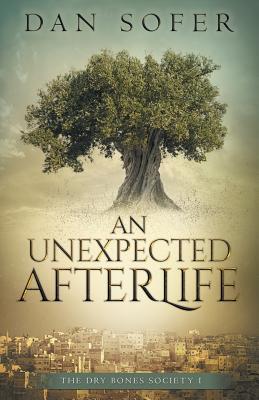
Book Review: An Unexpected Afterlife by Dan Sofer

34348069

Moshe Karlin wakes up one morning, naked and alone, in the Mount of Olives Cemetery. According to his family and friends, he died two years ago, but Moshe is not about to accept his demise lying down.

Is his new lease on life a freak of nature or the start of the long-awaited Resurrection? Moshe doesn’t really care. He vows to beat his “afterlife crisis” and win back his life-and his wife-if it is the last thing he does.

But the road ahead is full of unexpected dangers. Along the way he gains insight into life, love, and the Jewish State, as well as the suspicion that perhaps his perfect first life was not so perfect after all.

Meanwhile, other changes are afoot in the Holy Land. A reluctant prophet prepares to deliver a message of redemption-and the end of life as we know it-when a freak accident changes the course of history.

Readers who enjoy the satire and humor of Kurt Vonnegut, Carl Hiaasen, Terry Pratchett, and Douglas Adams will enjoy this intriguing and humorous mystery in the Jewish lore and legends of the Resurrection, the World to Come, and the Messianic Era.

Seems at first like a strange book for a Catholic to read, right? It was actually really intriguing and educational for me and I enjoyed it enough to really want to read the sequel (though not SO much that I’ve already read it)! I’m not sure whether a Jewish person would say the same, but I didn’t have any religious qualms with it (say, like how I won’t read Dan Brown’s DaVinci Code because I have no interest in reading what I consider to be blasphemous things about Christ). Rather, for me, the book served to educate me a bit on Jewish theology and thought.

When Moshe comes back from the dead he ends up staying at the home of a local Rabbi, who is convinced that Moshe (and others in his situation) herald the coming of the Messianic era. He says, “The Messianic Era. We believe that the End of Days will see the Resurrection of the Dead, the return of Elijah the Prophet, and the revelation of the Messiah-King, son of David.” (Loc 290) A lot of what the Rabbi then does, in terms of hosting Moshe, engaging with his Rabbinical colleagues/superiors, etc., assuming it is factually-based, sheds a lot of light on Jewish culture and religious organization – which, admittedly, I know little to nothing about.

I was struck by the similarities with Catholicism, though I’m not sure why – after all, Christ was Jewish and His Church descended from Judaism. I noted while I was reading that the Rabbi broke bread and gave it and wine to his guests, just as Christ did at the Last Supper. The Rabbi’s explanation of life after the Resurrection–at least in terms of the healing of the body–is very similar to Catholic teaching. I also noted that the explanation given for trust put in the “leading Rabbis of the generation” (Loc 2364) is strikingly similar to the Catholic Magisterium – we believe that the Holy Spirit guides the leaders of the Church to the right conclusions and therefore we trust in their authority.

There is a fascinating discussion by scientists in a hospital setting about having obtained “scientific proof” that all people descended from a single female. It would be fascinating if such proof actually existed! It was a great reminder, though, of science being part of mankind’s search to understand the world that God created, and that, therefore, no person of faith should ever fear science nor see science and religion as incompatible.

These are the lasting impressions I had of the book, but all of these insights gained were wrapped up in a compelling narrative with relatable, realistic characters. I was invested in Moshe’s survival and his efforts to win back his wife, as well as the life of the “reluctant prophet” described in the book blurb. I was also struck by the all-too-realistic exploitation of the resurectees (is that a word?) by criminal elements out to profit only themselves.

All this is to say: it’s an enjoyable and realistic read that also caused me to think and to learn, which is what I love in a book. It was entertaining AND edifying!

Four stars!

Top 100 Catholic Books of all time?

I came across a really interesting post on Aleteia today called, “Confessions of a Catholic book hoarder” that reposted a list (credited to Fr. John McCloskey) of the supposed top 100 Catholic books of all time. I can’t vouch for whether that’s true, as I have not read most of them, but I enjoy lists like this and thought it would be interesting to share. I’ve noted the ones I’ve actually read, as well as those I own but haven’t read.

What about you? Have you read any of these? What do you think – do they belong on this list? Is there something you would add? Subtract? Let’s chat!

Fr. McCloskey’s Catholic Lifetime Reading Plan:

Catholicism Explained/Theology

The Spirit of Catholicism by Karl Adams
Spirit and Forms of Protestantism by Louis Bouyer
Christianity for Modern Pagans by Peter Kreeft
The Lord by Romano Guardini
Essay on Development of Christian Doctrine by Cardinal Newman
Parochial and Plain Sermons by Cardinal Newman
End of the Modern World by Romano Guardini
Rome Sweet Home by Scott & Kimberly Hahn
Fundamentals of Catholic Dogma by Ludwig Ott — read parts for a class, own
The Four Cardinal Virtues by Josef Pieper

History and Culture

The Great Heresies by Hilaire Belloc
How The Reformation Happened by Hilaire Belloc
Survivals and New Arrivals by Hilaire Belloc
Christendom I: Founding of Christendom by Warren Carroll

Holy Men and Women

Something Beautiful for God by Malcolm Muggeridge
Apologia Pro Vita Sua by John Henry Newman
Journal of a Soul by Pope John XXIII
The Long Loneliness by Dorothy Day
St. Thomas Aquinas: The Dumb Ox by G. K. Chesterton
St. Francis of Assisi by G. K. Chesterton
Seven Storey Mountain by Thomas Merton
Mary of Nazareth by Federico Suarez
Cure of Ars by F. Trochu
Thomas More: A Portrait of Courage by Gerard B. Wegemer
Witness to Hope: The Biography of Pope John Paul II by George Weigel

Literary Classics

Lord of the World by Robert Hugh Benson
The Diary of a Country Priest by George Bernanos
Hopkins: Poetry and Prose by George Manley Hopkins
Don Quixote by Miguel de Cervantes
The Divine Comedy by Dante Alighieri — own this, but have not read it
Christianity and Culture by T. S. Eliot
The Idea of a University by John Newman
Silence by Shusaku Endo
Quo Vadis by Henryk Sienkiewicz
Lost in the Cosmos : The Last Self-Help Book by Walker Percy
Love in the Ruins by Walker Percy
Kristin Lavransdatter I: The Bridal Wreath by Sigrid Undset
Kristin Lavransdatter II : The Wife by Sigrid Undset
Kristin Lavransdatter III: The Cross by Sigrid Undset
Flannery O’Connor: Complete Stories by Flannery O’Connor
The Lord of the Rings by J. R. R. Tolkien — read this a LONG time ago; also own it
Brideshead Revisited by Evelyn Waugh

Spiritual Classics

Confessions of St. Augustine by St. Augustine — read!
Little Talks with God (modernized version of “The Dialogues”) by St. Catherine
City of God by St. Augustine
The Problem of Pain by C. S. Lewis
Dark Night of the Soul by St. John of the Cross
Mere Christianity by C. S. Lewis — read!
The Screwtape Letters by C. S. Lewis — read!
The Everlasting Man by G. K. Chesterton
Orthodoxy by G. K. Chesterton
The Greatest Story Ever Told by Fulton Oursler
Meditations from a Simple Path by Mother Teresa
Interior Castle by St. Teresa of Avila
The Way of Perfection by St. Teresa of Avila
Story of a Soul by St. Therese of Lisieux — read!
My Way of Life/Summa Theologica by St. Thomas Aquinas — read portions for classes, own – it’s numerous large volumes, which I cannot imagine just reading through like a book!

Spiritual Reading

The Great Means of Salvation and Perfection by Alphonso Liguori
Uniformity with God’s Will by Alphonso Liguori
Spiritual Theology by Jordan Aumann
Frequent Confession by Benedict Baur
In Silence with God by Benedict Baur
Difficulties in Mental Prayer by Eugene Boylan
The Tremendous Lover by Eugene Boylan
Covenanted Happiness by Cormac Burke — I own this, and started reading it but I found it incredibly hard to get through and gave up pretty early on
The Soul of the Apostolate by Jean-Baptiste Chautard
Friends of God by Jose Maria Escriva
Christ Is Passing By by Jose Maria Escriva
The Way, Furrow, The Forge by Jose Maria Escriva
Way of the Cross by Jose Maria Escriva
All for Jesus by Frederick W. Faber
Abandonment to Divine Providence by Jean-Pierre De Caussade
Introduction to Devout Life by Francis deSales
Treatise on the Love of God by Francis deSales
Three Ages of Interior Life Volume I by Fr. Reginald Garrigou-Lagrange
Three Ages of Interior Life Volume II by Fr. Reginald Garrigou-Lagrange
Sinner’s Guide by Venerable Louis of Grenada
The Imitation of Christ by Thomas A. Kempis
True Devotion to the Holy Spirit by Luis M. Martinez
True Devotions by Louis-Marie Grignion De Montfort
The Hidden Power of Kindness by Lawrence G. Lovasik
The Betrothed by Alessandro Manzoni
The Sadness of Christ by Thomas More
Conversation with Christ by Peter T. Rohrbach
Spiritual Combat by Lorenzo Scupoli
Theology and Sanity by Francis J. Sheed
Theology for Beginners by Francis J. Sheed
To Know Christ Jesus by Francis J. Sheed
Life of Christ by Fulton J. Sheen
Three to Get Married by Fulton J. Sheen
The Spiritual Life by Adolphe Tanqueray
Abba Father by Bonaventure Perquin
Transformation in Christ by Dietrich von Hildebrand

Miscellaneous

Crossing the Threshold of Hope by Pope John Paul II
Companion Guide to Rome by Georgina Masson
The King’s Good Servant but God’s First by James Monti
50 Questions on the Natural Law by Charles E. Rice
The Intellectual Life by A. G. Sertillanges
Essays on Woman by Edith Stein