Summer Reading, Part II: Feelings and Classics

Picking up where we left off, it’s time to talk about what I assigned my new fourth grader to read this summer. I started the summer with just one book I wanted her to read, figuring one book plus the typing program I wanted her to do and the Italian language lessons she wanted to do (via Mango, free through the library!) would be plenty. But she asked for books and book projects so I obliged.

Feelings

Why feelings? Because tweens have a LOT of them. I worked through this book with my oldest the year I homeschooled the kids, which was also fourth grade. Truth be told, we haven’t quite finished but we’re almost through it. We read some together, she read some on her own, and she did the exercises in a notebook. I’m not sure whether it’s helped her, but it’s helped me understand what she thinks about and how she sees herself and that is useful info as a parent. At the very least it’s opened up some conversation. The book:

Classics

As a starting point, we got out the literature curriculum I used with my oldest when I homeschooled fourth grade and looked through the book list. We ended up with:

I had all kinds of activities we could’ve done, but we mostly didn’t. What we did do: she did some of the homeschool curriculum reading comprehension questions for Charlie and the Chocolate Factory so I could gauge what she retained/understood, we (mostly she) made cabbage soup for dinner one night (like the Buckets ate for every meal), and she watched the movies for each book. I think there was some drawing of spiders and maybe Templeton the rat in there too. I had the idea of making donuts because it seems like everyone in Charlotte’s Web is eating donuts for breakfast all the time but we just ran out of summer before I had the energy envelope to do anything like that. We did have some informal conversations about the differences between the movies (particularly for Charlie and Chocolate Factory) and the books; Charlotte’s Web actually is very very close to the book.

Though I’ve seen both movies (the Gene Wilder as Wonka version, of course) many times, I’m not sure I had actually read either book all the way through so I welcomed the opportunity to do so. Then I learned a little about E. B. White (did you know he’s the same White as The Elements of Style?) and read The Trumpet of the Swan to myself in honor of his birthday (July 11). I enjoyed it, but it wasn’t as good as Charlotte’s Web or Stuart Little.

That was it. Next time we’re gonna talk about CHICKENS. UNUSUAL chickens…

Summer Reading, Part I: Ninjas (and some dinosaurs)

I grew up with summer reading assignments, which I especially remember in high school. My kids have had zero. Four kids, 10 years of school, zero summer reading. Makes me sad. So, I assigned my own! As our summer wraps up (my kids go back to school this week!, I’m sharing what we’ve read.

In truth, my kids read voraciously. It’s not that I needed to assign things to make them read. My husband is frequently telling me I’ve created monsters, and I giggle a little satisfied, evil laugh–the best kind of monsters! Every kid has a kindle (I got tired of sharing) and a reading light for their beds, and everyone gets reading time in bed every night. I have occasionally gotten a, “you know, Mom, so-and-so gets to watch TV in bed before going to sleep…” — not gonna happen. Anyway, my point: they read A LOT on their own.

So if I didn’t need to make them read, why assign reading? I had different goals for each kid and the books I (or they) chose reflected that. I’m going to do a multi-part (separate posts because I don’t have the stamina for long posts) run-down, by incoming grade level of the child:

Second Grader

My goal was basically to entertain him with something that would interest him but he wouldn’t have picked up himself, and that would allow for a variety of independent projects. I chose:

Did you guess he really likes ninjas? The actual book to my surprise only took him about 20 minutes to read, and I verified comprehension with some worksheets from the excellent teaching resources on the author’s “classroom adventures” site. The Fact Tracker is more dense, nonfiction and very detailed. It took longer to get through, broken up across a week or two. We also did (most of) a mini “research” project from the website materials. And plenty of crafts (stick ninjas, a paper samurai hat, and more). I based our activities loosely on the provided plans and if my son wanted to modify things, I usually let him–the goal was to read something he wouldn’t have picked up on his own, learn, be creative, and have fun. Oh, and there’s been LOTS of dressing up like a ninja, fighting like a ninja, trying to sneak around like a ninja, etc…

It’s an added bonus that he then decided to start the Magic Tree House series at the beginning. I think he read 22 of them before he lost interest, some from our shelf (we have a very incomplete set from when my oldest was into them maybe 9 or 10 years ago?) and kindle library checkouts.

We also got a used copy of an out-of-print dinosaur activity book, Triassic Terrors. It was… ok. Less of a hit with him but had some fun activities, including some game where you pop out the pieces and set them up. I think we have maybe two pages left undone? It was worth the $7 I paid for it on Thrift Books.

I’ll be back whenever energy allows with more of our summer reading fun!

Banning Books is BAD

That, to me, is an obvious statement but alas…

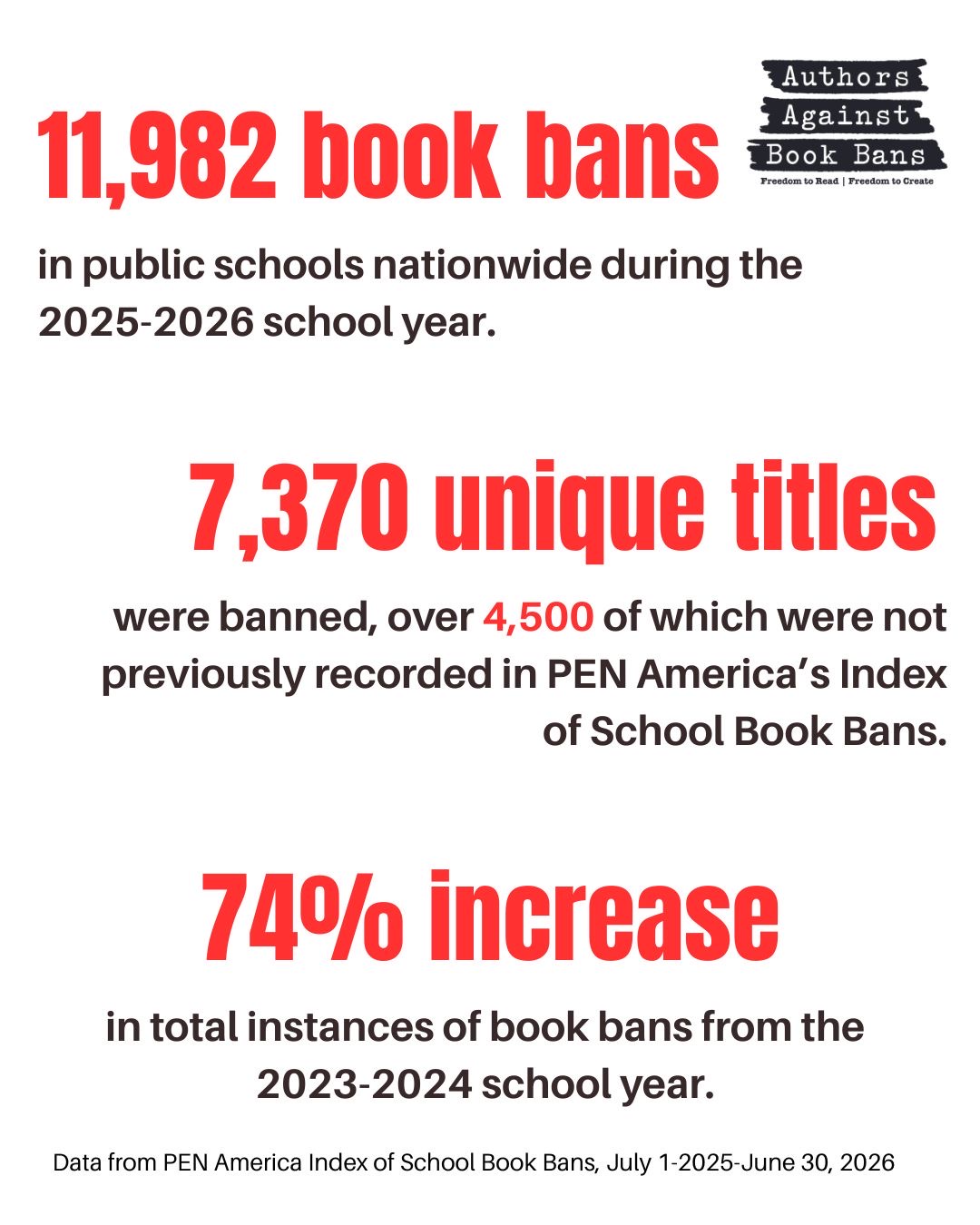
There’s tons of info out there about the fact that book banning is on the rise in the United States. Proponents will tell you they’re protecting people–usually kids– from harmful content. They’re wrong, but even if there were some noble purpose behind the efforts, censorship of any kind is a violation of the first amendment right to free speech, which includes the freedom to write and the freedom to read. Worse still, there’s been an uptick in efforts to ban nonfiction books–that’s banning FACTS, friends. Fiction promotes empathy and understanding but nonfiction is KNOWLEDGE and banning knowledge is dangerous and downright frightening.

PEN America has a ton of well-researched info on book banning in the United States (articles they’ve published are where I got the info in the previous paragraph); I encourage you to take a look and educate yourself if you’re not already familiar.

Thankfully, there are lots of good people and organizations fighting against bans in various ways. One of these organizations is Authors Against Book Bans (AABB), which I’ve joined. From their website:

“Our aim is to form chapters in all 50 states and DC to provide:

  • A framework for local organizing,
  • Coordination and “ban alert” information on a national level,
  • Strategic calls to action at local and national levels,
  • Partnerships with a variety of national organizations and grass-roots groups that support the freedom to read,
  • Support and encouragement for the educators, librarians, parents, and students who are the first line of defense against censorship, and for the authors whose books are under attack.”

Thanks to AABB, I can do more to support the freedom to read than wear my “Censorship is so 1984” shirt and yap on about it to my kids. Just recently, I started volunteering with AABB to help with their social media on BlueSky. For better or worse, with all my time in bed I can easily check in on the account, respond to posts, and post new content. Our aim is to highlight actionable info — no action is too small, too local, so you if you know of anything going on where you live please let me know!

And if you are a creator of literature (“If your name has ever been printed in a book as a credit to its creators, you are welcome to join us. We are looking for writers, illustrators, narrators, translators – all the people who create literature. We are completely genre-agnostic and are open to traditionally and independently published creators.”), consider joining AABB and getting on their email list for updates and ways to help.