Banning Books is BAD

That, to me, is an obvious statement but alas…

There’s tons of info out there about the fact that book banning is on the rise in the United States. Proponents will tell you they’re protecting people–usually kids– from harmful content. They’re wrong, but even if there were some noble purpose behind the efforts, censorship of any kind is a violation of the first amendment right to free speech, which includes the freedom to write and the freedom to read. Worse still, there’s been an uptick in efforts to ban nonfiction books–that’s banning FACTS, friends. Fiction promotes empathy and understanding but nonfiction is KNOWLEDGE and banning knowledge is dangerous and downright frightening.

PEN America has a ton of well-researched info on book banning in the United States (articles they’ve published are where I got the info in the previous paragraph); I encourage you to take a look and educate yourself if you’re not already familiar.

Thankfully, there are lots of good people and organizations fighting against bans in various ways. One of these organizations is Authors Against Book Bans (AABB), which I’ve joined. From their website:

“Our aim is to form chapters in all 50 states and DC to provide:

  • A framework for local organizing,
  • Coordination and “ban alert” information on a national level,
  • Strategic calls to action at local and national levels,
  • Partnerships with a variety of national organizations and grass-roots groups that support the freedom to read,
  • Support and encouragement for the educators, librarians, parents, and students who are the first line of defense against censorship, and for the authors whose books are under attack.”

Thanks to AABB, I can do more to support the freedom to read than wear my “Censorship is so 1984” shirt and yap on about it to my kids. Just recently, I started volunteering with AABB to help with their social media on BlueSky. For better or worse, with all my time in bed I can easily check in on the account, respond to posts, and post new content. Our aim is to highlight actionable info — no action is too small, too local, so you if you know of anything going on where you live please let me know!

And if you are a creator of literature (“If your name has ever been printed in a book as a credit to its creators, you are welcome to join us. We are looking for writers, illustrators, narrators, translators – all the people who create literature. We are completely genre-agnostic and are open to traditionally and independently published creators.”), consider joining AABB and getting on their email list for updates and ways to help.
“The Myth of Neutral Books”

The title of this post is in quotes because I appropriated it from an author friend’s newsletter, and I quote him here:

Primary days, like today in my state, make politics visible. Books work more slowly. They work under the surface, shaping our sympathies before we realize anything’s happening at all. Long before we vote, stories have already been teaching us what feels normal, what feels outrageous, what feels possible, and who deserves the benefit of the doubt. — Ryan Pozzi, Author

We were lucky enough to publish Ryan in Epistemic Lit’s Nostalgia issue last year, and I’ve since signed up for his newsletter, Life on the Midlist, which I look forward to reading every Tuesday because it always contains wisdom like the quote above. Sign up to get it in your inbox or read it on his website!

So why am I quoting Ryan here in my post? The political nature of writing is something that’s been on my mind lately. Our most recent Epistemic issue is overtly political–nothing neutral about it. Righteous Rage is the topic, and the writers brought fire! That said, I don’t agree with every viewpoint presented in the issue. At the outset of the magazine that was something I struggled mightily with but I don’t anymore; my co-founder and friend Melissa summed it up really, really well (far better than I ever could! so please read it!) in this interview she did for Emrae Publishing’s Read and Resist feature: Leaflets of Rebellion with Epistemic Lit.

So that brings me back to Ryan’s quote. Reading shapes us and shapes our worldview. What and who we pay attention to is a statement of value, of respect, of attention. As a publisher, I’m drawn to poems I don’t understand or with which I disagree because I want to listen and learn. My faith is a giant question mark these days but I firmly believe in the dignity of every human person, and I believe we are called to love every human person. I love by paying attention–what I choose to publish (and, separately, to read and to guide my children to read–a topic for another post!) is a reflection of what I’m paying attention to, what I’m listening to, what I’m trying to understand. What I hope others pay attention to. So we can have a little more love and a little less hate.

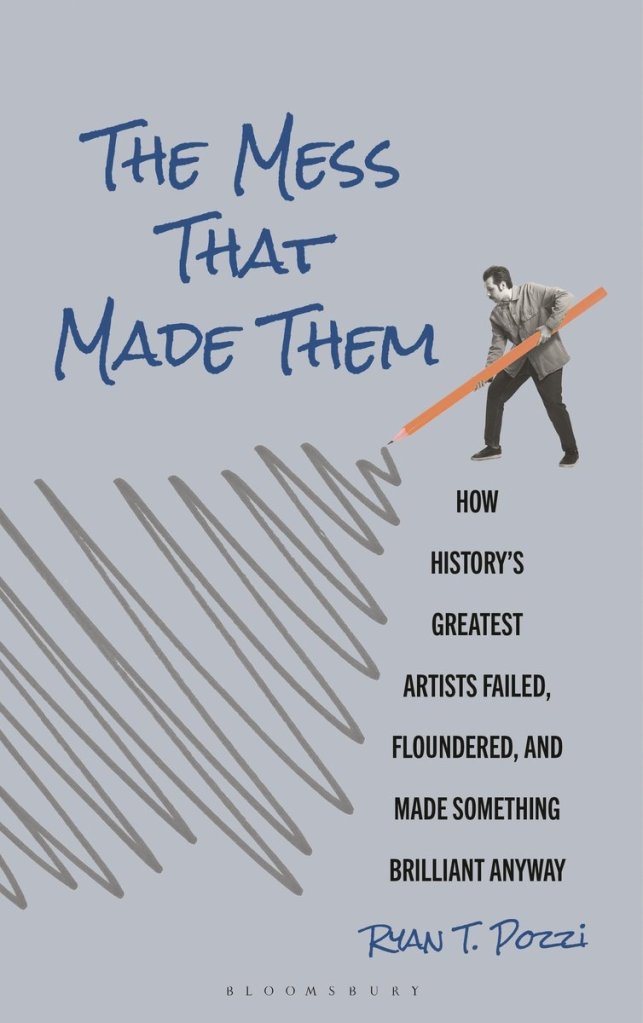
Can’t leave without encouraging you to preorder Ryan’s upcoming book, The Mess That Made Them. Click the cover below to preorder via bookshop dot com!

Cover of "The Mess that Made Them: How History's Greatest Artists failed, floundered, and made something brilliant anyway" by Ryan T. Pozzi

Book Review: American Wolf by Nate Blakeslee

41078131 American Wolf by Nate Blakeslee is the most recent read in my effort to get through all the books I irresponsibly got via NetGalley last year and never read. Essentially, it’s the story of the wolf in America, focusing on “recent” events since the reintroduction of wolves to Yellowstone National Park in 1995. The book follows the lives of the wolves, as chronicled by a handful of avid (or obsessed?) wolf-watchers in the park over many years, as well as the political, cultural, and societal factors that impact wolves’ survival in the American West.

The most gripping parts of the book are Blakeslee’s reporting on the life of O-Six, a female wolf born in 2006 in the park. He succeeds in telling a gripping story of life and survival for wolves as they face both natural and man-made threats. It reads almost like a novel, and definitely paints a vivid picture of wolf society. I learned so much about wolves, the evolution of individual wolf packs, and the social interactions of what are clearly very intelligent and emotional animals.

Woven into the story is the political, societal, and legal context in which the wolf reintroduction and population management unfolded. It was interesting to read about the events through the 2000s and to understand how events I lived through (sequestration and the 2011 threat of a government shutdown, followed by an actual shutdown in 2013) impacted things across the country. It’s disturbing and yet unsurprising, especially having lived my entire adult life in the DC area, to read of the political nonsense–riders circumventing legal protections for wolves tacked on last minute to a must-pass spending bill in 2011, for example.

I couldn’t help but root for the wolves as I read the book, while I understand the legitimate concerns of residents of areas surrounding Yellowstone as they coped with rising wolf populations. I’m glad I read the book, and sorry it took me so long to actually pick it up to read. I give the book 4 stars, only subtracting one because I feel it starts out a little slowly and took some effort to get into. Persevere, though! It’s worth it!

4 stars!