Superlative vs. Comparative – Getting all grammar-y!

So I acknowledge that I am sort of uptight about grammar (which I get from my dad), so I’m usually surprised and a bit disappointed in myself when someone corrects my grammar. So recently I had a little text convo with my parents where I described my 6-year-old as the baby’s “oldest sister” (she has two sisters, both older than she is). My dad texted back, “older.” And I said, “isn’t it ‘oldest’ so it can be clear which sister I’m talking about?” He said no, so I had to look it up.

Apparently, according to traditional grammar rules, my dad is right: the superlative form (-est) is reserved for comparing groups of three or more. Since I was speaking of only two of my girls, the comparative form (-er) would have been more appropriate.

Really, I should have known my dad was right; he usually is about these things. I just don’t like to be corrected.

That said, this seems to be one of those rules that is frequently broken – so now it’s more of a “rule.” There are discussion boards galore of people going back and forth trying to figure out when to use the superlative vs. the comparative, and really my original way of saying it has become pretty common in spoken English. I even double checked The Elephants of Style (my review here) to see what Bill Walsh has to say about it, but it’s actually not covered in the book.

Basically, I’m left with this: The superlative should be reserved for comparisons among groups of three or more items; however, that will sometimes lead to confusion, and so many people are going to choose clarity over grammatical-correctness and break the rule.

Now that I have ineloquently shown myself to be a HUGE grammar nerd, please – weigh in! Tell me what YOU think!

If you could have dinner with an author…

I’m borrowing from Angela at Books and Opinions again (thanks, Angela!).

Usually I dislike this kind of question – “if you could have dinner with any person, living or dead, who would it be?” – I’ve never had a good answer. But for this questions, I had an immediate answer, but I debated whether it was stalker-ish to post it. Clearly, I decided it’s not:

If I could have dinner with an author, it would be UK indie author Lizzie Steel.

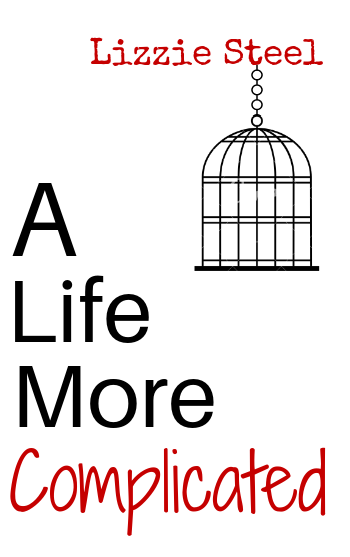
Lizzie SteelA while back I reviewed Lizzie’s first book, Running Home, calling it one of the best fiction books I’ve ever read. Recently, I looked her up on Amazon so I could recommend the book to a friend and I discovered she wrote a second (phenomenal!) book, A Life More Complicated. Having loved Running Home, I bought and read A Life More Complicated immediately. I do plan to review the book more thoroughly, but here I will simply say that this book was amazing. She calls it gritty – and it is. It is gritty and gripping and painfully real.

Running Home Book CoverA Life More Complicated Book Cover


So, I would like to have dinner with Lizzie Steel because I find her writing compelling, and I am in awe of how she masterfully tells her stories from her desk in the playroom while battling crippling anxiety. As a mom-trying-to-be-an-editor, and suffering with my own history of post-partum mental illness, I identify with Lizzie and take encouragement from her bravery in putting herself out there – and succeeding splendidly!

Is it an idiom?

Image result for clipart idiom

So it has been suggested to me by one of the smartest people I know that “something caught their eye” is an idiom, rather than bad grammar. Further, this person (who knows me kinda well…) suggested I don’t like it because it’s an idiom and therefore not formal English.

A few thoughts:

  • If it’s an idiom, it’s a dumb one and I still think it sounds bad.
  • I’m not opposed to idioms, in and of themselves. They reflect a common culture, and therefore form an important part of language.
  • That said, they are not formal English and so sometimes (ok, maybe a lot of times) I don’t like them. I think it’s more important for them to be used appropriately – it’s important to avoid too much cliché in good literature, for example. Idioms have a place in children’s books in order to teach our kids that cultural aspect of language.
  • When I was studying Italian, I really struggled with idioms because they defied all grammar rules. I guess that’s true in English, too, and apparently I struggle a little with them even in my native language.

Maybe I don’t like idioms…

Thoughts?